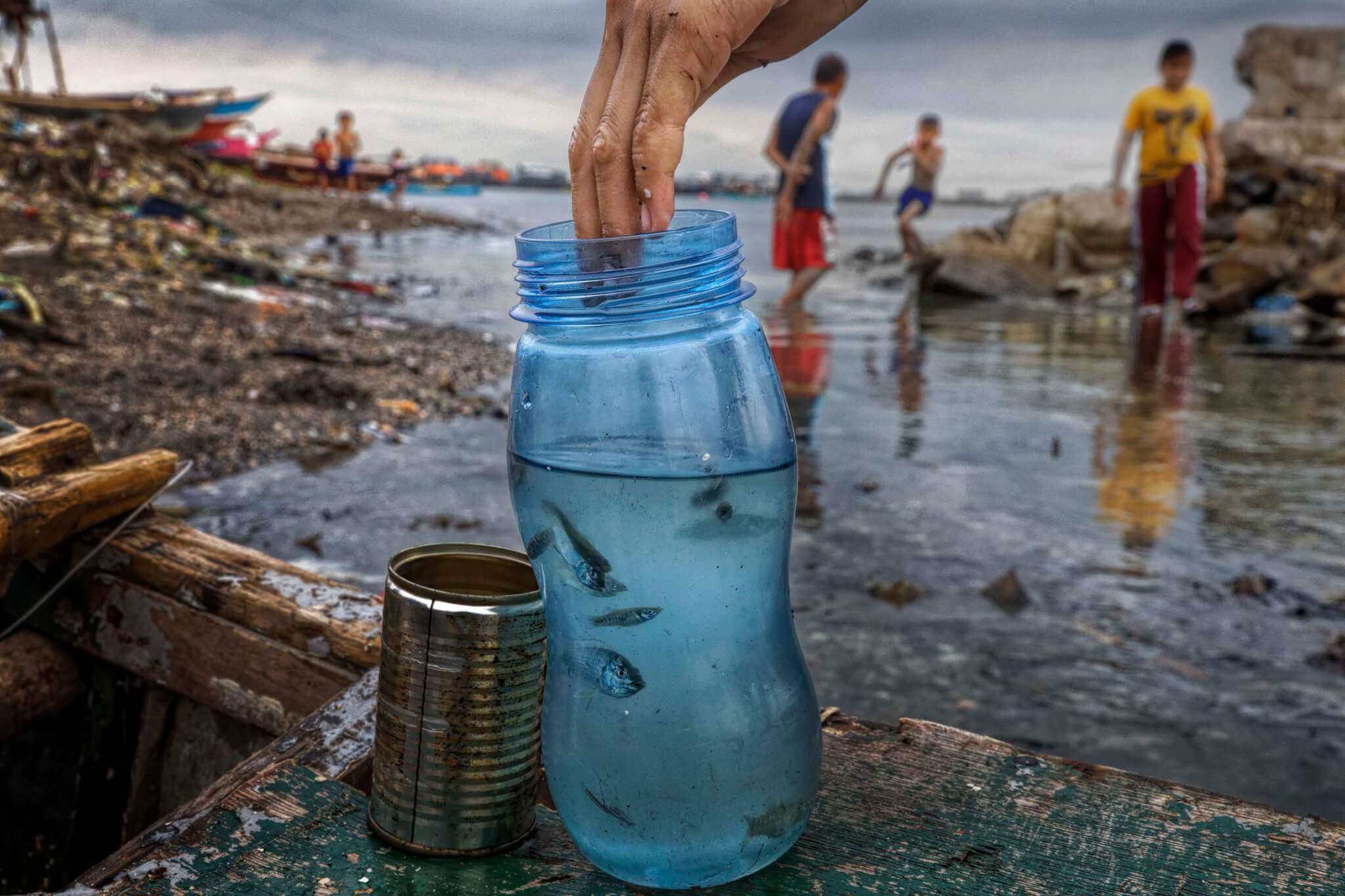
Baseco Beach called the Ten Hectare beach at the north tip of Baseco slum area. This beach is covered with trash from the Pasig river and other sources. Trash is visible on all edges of Manila bay but it is particularly bad here. These are all underwater photos taken in a stream that comes from Manila bay, goes thru a fish hatchery and comes out a BIT cleaner and then goes back into Manila bay. Check releases for November 2 release folder, for names of folks photographed in this area. The lingering memory from this trip will be that all our garbage goes SOMEWHERE and in the Philippines it goes to the most marginalized areas to sort, de-label and pile up. In this culture plastic is money and artisanal industries are all around the dumps and tourist areas where plastic trash comes out of casinos and hotels. Children push aside used toilet paper to find bits of plastic that net 5 pesos a kilo. Junk shops then take it to plastic processors for around 22 pesos a kilo. It takes about 16 one liter Coke bottles to weigh one kilogram. The Philippines is the third largest contributor to ocean plastics with 500,000 tons a year. Twenty-five percent of the waste of the Philippines is produced in Metro Manila. The Pasig River runs through metro Manila and empties into Manila Bay at Baseco. The river carries 63,700 tons of plastic waste annually into Manila Bay. Sixty percent of all waste in Manila Bay is plastic. Most of the photographs are shot in Baseco, Tondo, Chinatown and Payatas where the plastic either builds up or is brought to these areas to sort. Household waste per family is 3.2kg/day or 0.5 kg /person Solid Waste Management expenses for 17 LGUs in Metro Manila is about 5 billion PHP. The value of plastic packaging lost to the economy each year is worth $80-120 billion (= 2x 2017 Philippine National Budget) The oceans may contain more plastic than fish by 2050. 7 billion kg of plastic enters the ocean each year. Marine plastic kills over 1,000,000 sea bir